
Most people rarely think about their gallbladder until it starts causing problems. A sudden attack of severe abdominal pain after a meal, recurring indigestion, or persistent discomfort can quickly make this small organ impossible to ignore. Gallbladder disorders are common and affect millions of people every year. While some individuals may have gallstones without symptoms, others experience recurring pain and complications that significantly affect their quality of life. In many cases, gallbladder removal surgery offers the most effective long-term solution.
Thanks to advances in minimally invasive techniques, laparoscopic gallbladder removal has become a safe and reliable procedure that allows patients to recover faster and return to normal activities sooner.
What is the Gallbladder?
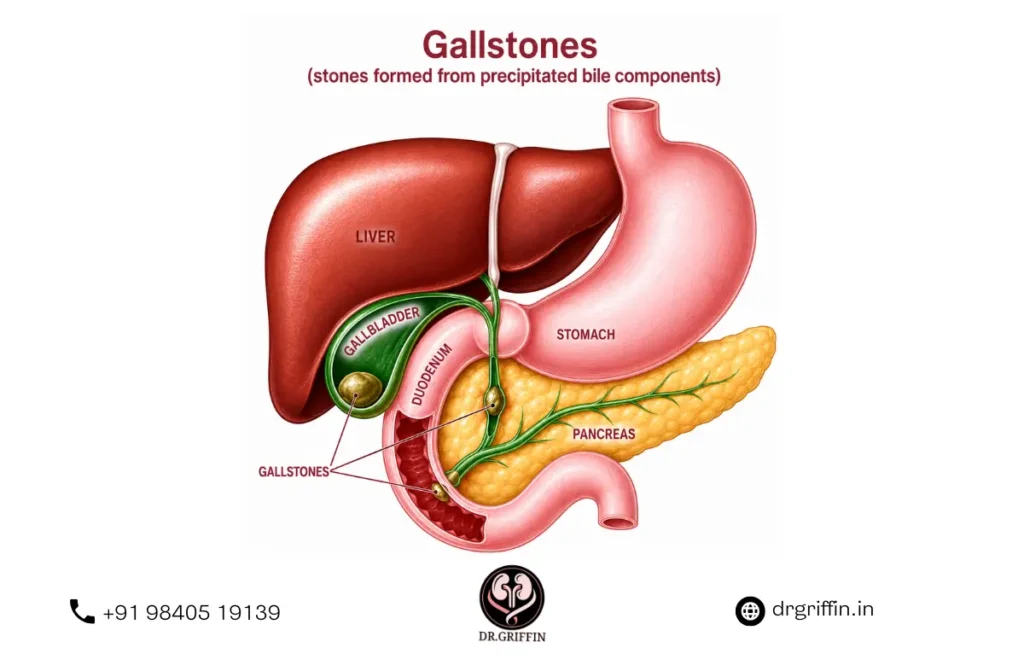
- The gallbladder is a small pear-shaped organ located beneath the liver on the right side of the abdomen. Although it is relatively small—usually about the size of a pear—it plays an important role in digestion.
- The gallbladder acts as a storage reservoir for bile, a digestive fluid produced by the liver. It stores and concentrates bile until the body needs it to help digest food, particularly fats.
- Unlike organs such as the heart, liver, or kidneys, the gallbladder is not essential for survival. People can live healthy and active lives without it because the liver continues producing bile even after the gallbladder is removed.
Did You Know?
Your liver produces bile continuously throughout the day. The gallbladder’s main job is simply to store and release this bile when needed during digestion.
What Does the Gallbladder Do?
The digestive system relies on bile to break down dietary fats. The gallbladder helps make this process more efficient.
Its functions include:
- Storing bile: The liver constantly produces bile, but the body does not always need it immediately. The gallbladder stores excess bile between meals.
- Concentrating bile: The gallbladder removes water from bile, making it more concentrated and effective.
- Releasing bile during digestion: When you eat, especially fatty foods, the gallbladder contracts and releases bile into the small intestine, where it helps digest fats and absorb nutrients.
When gallbladder function is disrupted, digestion can become uncomfortable, leading to symptoms such as bloating, nausea, and abdominal pain.
What Causes Gallbladder Problems?
Several conditions can affect the gallbladder, but gallstones remain the most common cause.
- Gallstones: Gallstones are hardened deposits that form within the gallbladder. They can vary in size from tiny grains to large stones. Some people never notice them, while others experience severe pain when stones block bile flow.
- Inflammation (Cholecystitis): When gallstones block the gallbladder outlet, bile becomes trapped and causes inflammation. This condition can result in intense pain and may require urgent treatment.
- Gallbladder Polyps: Polyps are growths that develop inside the gallbladder. While many are harmless, larger polyps may require removal because of a potential cancer risk.
- Poor Gallbladder Function: Sometimes the gallbladder does not empty properly even when no stones are present. This can lead to chronic digestive symptoms and recurring discomfort.
Who is More Likely to Develop Gallstones?
Although anyone can develop gallstones, certain factors increase the risk.
You may be at greater risk if you:
- Are over the age of 40
- Are female
- Are overweight or obese
- Have diabetes
- Have a family history of gallstones
- Are pregnant
- Have experienced rapid weight loss
- Consume a high-fat diet regularly
Understanding these risk factors can help individuals make lifestyle choices that support gallbladder health.
What are the Symptoms of Gallbladder Problems?
Gallbladder disease can present differently from person to person. Some symptoms may be mild initially but become more severe over time.
- Upper abdominal pain: Pain in the upper right side of the abdomen is the most common symptom. It often occurs after eating rich or fatty meals and may last for several hours.
- Nausea and vomiting: Gallbladder attacks frequently cause nausea and, in some cases, vomiting due to digestive disruption.
- Bloating and indigestion: Many people mistake gallbladder symptoms for simple indigestion. Frequent bloating, fullness, or discomfort after meals should not be ignored.
- Pain spreading to the back or shoulder: Gallbladder pain may radiate to the upper back or right shoulder, making it feel different from ordinary stomach pain.
- Fever and jaundice: Fever, chills, and yellowing of the skin or eyes may indicate infection or bile duct blockage and require immediate medical attention.
When is Gallbladder Removal Surgery Needed?
Not every gallstone requires surgery. However, doctors often recommend gallbladder removal when symptoms become persistent or complications develop.
Surgery may be advised if you experience:
- Repeated gallstone attacks
- Chronic abdominal pain
- Gallbladder inflammation
- Blocked bile ducts
- Gallbladder polyps requiring treatment
- Recurrent digestive symptoms affecting daily life
Delaying treatment may increase the risk of infection, pancreatitis, or other serious complications.
What are the Advantages of Laparoscopic Gallbladder Surgery?
Modern gallbladder surgery is usually performed using a laparoscopic approach, often called keyhole surgery. Instead of making one large incision, surgeons operate through a few small cuts using specialized instruments and a tiny camera.
Key advantages include:
- Smaller incisions: Tiny incisions mean less damage to surrounding tissues and a more comfortable recovery.
- Less pain: Patients typically experience significantly less postoperative discomfort compared to traditional open surgery.
- Faster healing: Smaller wounds heal more quickly, allowing patients to return to normal routines sooner.
- Shorter hospital stay: Many patients go home the same day or within 24 hours.
- Minimal scarring: The small incisions leave minimal visible scars after healing.
Pros and Cons of Laparoscopic Gallbladder Surgery
| Pros | Cons |
| Quick recovery | Temporary digestive changes |
| Less pain | Rare surgical complications |
| Smaller scars | Small risk of bile duct injury |
| Lower infection risk | Some cases may require conversion to open surgery |
| Shorter hospital stays | No major long-term limitations in most patients |
| High success rate | Mild digestive discomfort may occur initially |
Like any procedure, the benefits and risks should be discussed with your surgeon.
Is Laparoscopic Gallbladder Removal for You?
Laparoscopic gallbladder removal is suitable for most patients with symptomatic gallbladder disease.
You may be a good candidate if you have:
- Symptomatic gallstones
- Recurrent gallbladder attacks
- Chronic gallbladder inflammation
- Gallbladder dysfunction
However, certain medical conditions, previous abdominal surgeries, or severe infections may influence the surgical approach. Your surgeon will evaluate your overall health before making recommendations.
How Should I Prepare for Laparoscopic Gallbladder Removal?
Proper preparation helps ensure a safe procedure and smoother recovery.
Before Surgery Checklist
- Complete all recommended medical tests
- Inform your doctor about medications and supplements
- Follow fasting instructions carefully
- Arrange transportation home after surgery
- Wear comfortable clothing on the day of surgery
- Follow all preoperative instructions provided by your healthcare team
Being well-prepared can reduce anxiety and improve recovery outcomes.
How is Laparoscopic Gallbladder Removal Done?
Understanding the procedure often helps patients feel more confident.
- Step 1 – General anesthesia: You will be asleep throughout the procedure and will not feel pain.
- Step 2 – Small incisions: The surgeon creates several small openings in the abdomen.
- Step 3 – Camera-guided surgery: A tiny camera called a laparoscope is inserted to provide a clear view of the surgical area.
- Step 4 – Gallbladder removal: Specialized instruments carefully separate and remove the gallbladder.
- Step 5 – Closing the incisions: The small incisions are closed using stitches, surgical glue, or adhesive strips.
Most procedures are completed within one to two hours.
Laparoscopic Gallbladder Surgery Recovery Time
Recovery is usually quicker than many patients expect.
Recovery Period What to Expect
| Recovery Period | What to Expect |
| 24 Hours | Walking and light meals |
| 1 Week | Less pain and improved mobility |
| 2–3 Weeks | Return to routine activities |
| 4–6 Weeks | Near-complete recovery |
Did You Know?
- Gallstones can be as small as a grain of sand or as large as a golf ball.
- Some people have gallstones for years without symptoms.
- Gallbladder removal is among the most commonly performed abdominal surgeries worldwide.
How Does Gallbladder Removal Surgery Affect My Body?
One of the biggest concerns patients have is whether digestion will change permanently after surgery. The good news is that most people adapt very well.
After the gallbladder is removed:
- The liver continues producing bile
- Bile flows directly into the intestine
- Digestion continues normally
- Most people eat a regular diet after recovery
Some patients may experience temporary diarrhea, bloating, or sensitivity to fatty foods, but these symptoms usually improve over time.
Life After Gallbladder Removal
Life without a gallbladder is generally normal and healthy. During the first few weeks after surgery, it is often helpful to choose foods that are easier to digest.
Foods that support recovery include:
- Fresh fruits
- Vegetables
- Whole grains
- Lean proteins
- Soups and broths
- Low-fat dairy products
Foods to limit initially:
- Fried foods
- Fast food
- Heavy cream-based dishes
- Fatty meats
- Highly processed snacks
Most people gradually return to their normal diet within a few weeks and experience significant improvement in their overall comfort and digestion.
Why Remove the Gallbladder Instead of Stones?
- Many patients wonder why surgeons remove the entire gallbladder instead of simply removing the stones.
- The answer is simple: stones often return.
- Removing the stones alone does not address the underlying problem that caused them to form. New stones can develop over time, leading to repeated symptoms and additional procedures.
- Removing the gallbladder eliminates the source of stone formation and provides a more permanent solution.
- This is why gallbladder removal remains the standard treatment for symptomatic gallstones.
Conclusion
Gallbladder removal surgery is one of the safest and most successful procedures performed today. For people experiencing painful gallstones, chronic inflammation, or recurring digestive discomfort, laparoscopic surgery offers a reliable solution with minimal downtime and excellent long-term outcomes. Understanding the role of the gallbladder, recognizing warning signs, and knowing what to expect before and after surgery can help patients make informed decisions about their health. Most importantly, gallbladder removal is not about losing an organ—it is about gaining freedom from recurring pain and preventing future complications.
“A healthy life is not measured by the organs we keep, but by the comfort, confidence, and well-being we regain.”
Read also: Gallbladder Removal Side Effects.